
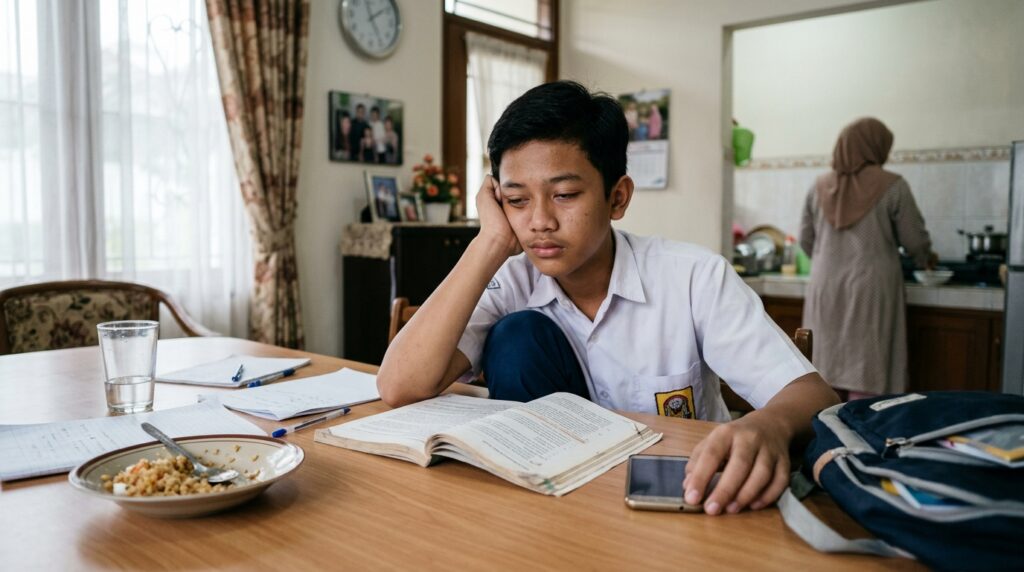
Late-night scrolling on social media may be costing teenagers more than just rest—it could also be eroding their enthusiasm for school. According to a study published in the International Journal of Adolescence and Youth, problematic TikTok use is closely tied to worsening sleep and emotional struggles, which in turn undermine adolescents’ academic drive. Conversely, young people who maintain strong real-world social bonds appear far more resilient, holding onto their natural enthusiasm to learn.
The Tug-of-War Between Screen Time and Schoolwork
The research highlights a stark contrast between compulsive digital habits and supportive real-world connections. Researchers found that problematic TikTok use was significantly linked to heightened emotional and behavioral challenges as well as increased sleep disturbance among secondary-school students. When young people get caught in obsessive viewing habits, their bedtime routines unravel, creating a ripple effect that impairs their daytime conduct and mood.
On the other hand, the study identified social connectedness as a vital protective shield. Teens who reported feeling deeply supported by family and peers demonstrated higher levels of psychological well-being. These adolescents were far more likely to exhibit autonomous motivation—an internal, self-directed desire to learn—while reporting markedly lower levels of amotivation, or the complete absence of academic intent.
How Sleep and Well-Being Bridge the Gap
To understand the mechanisms behind these patterns, the research team used composite path analysis, a statistical method that traces direct and indirect relationships among multiple psychological variables. Their analysis revealed that TikTok overuse does not simply dampen schoolwork directly; instead, it operates through an indirect chain reaction. Excessive screen immersion fueled sleep disruptions and behavioral hurdles, which subsequently triggered psychological distress and school-related disengagement.
In contrast, positive relationships worked in the opposite direction. Supportive bonds with peers and family cushioned students against emotional distress, preserving their mental health and sleep patterns. By shielding adolescents from emotional and behavioral difficulties, strong social ties indirectly sustained their autonomous drive in the classroom.
Inside the Study
The cross-sectional study surveyed 510 secondary-school students across two Indonesian cities, Salatiga and Jakarta. The participants—comprising 265 boys and 245 girls with an average age of roughly 13.5 years—provided detailed self-reports evaluating their digital media consumption, sleep quality, emotional functioning, and academic drive.
Notably, the researchers observed no significant variations between the different school environments. Whether students attended urban institutions in Jakarta or schools in Salatiga, the pathways linking digital behavior, sleep quality, social bonds, and academic motivation remained consistent, suggesting that these dynamics represent widespread developmental patterns in the digital age.
Limitations and Practical Takeaways
While the findings offer compelling insights into adolescent life, the authors emphasize that the study relied on cross-sectional data. Consequently, the research establishes clear statistical associations rather than definitive cause-and-effect relationships; future longitudinal studies will be necessary to track these behavioral trajectories over time.
Nevertheless, the practical takeaways for parents and educators are immediate. Rather than relying solely on strict screen bans, the authors suggest cultivating environments that encourage healthy digital boundaries alongside robust real-world social ties. Safeguarding teen sleep quality and nurturing genuine relationships may be among the most effective ways to preserve adolescent mental health and keep academic ambition alive.
Source
- Social connectedness, problematic tiktok use, and adolescent academic motivation: the roles of sleep and mental health
- Researchers: Fransisca Iriani Roesmala Dewi, Bonar Hutapea, Ernawati Ernawati, Bagus Mulyawan, Yohanes Firmansyah
- Journal: International Journal of Adolescence and Youth
- Read the original study