
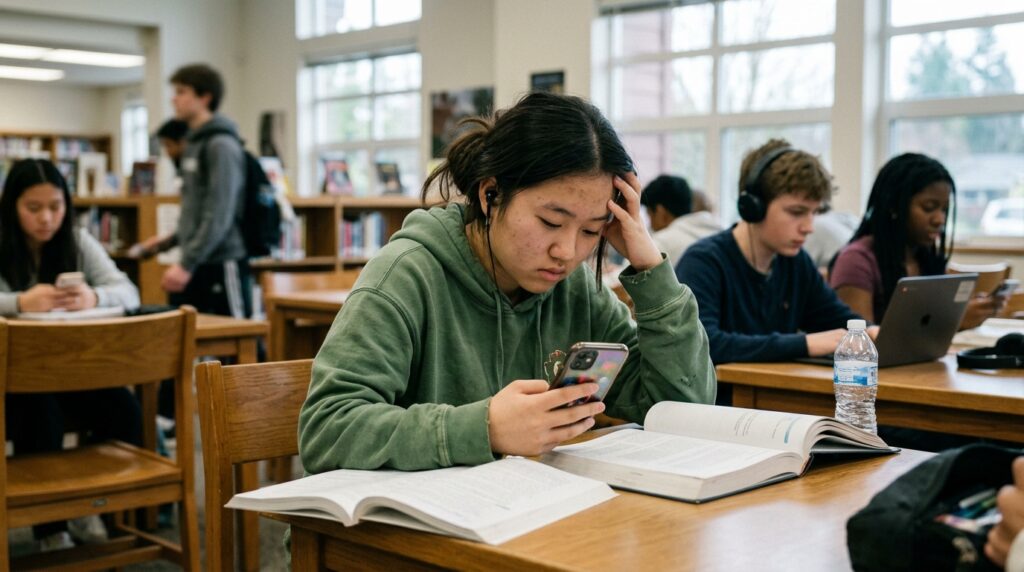
Recent concerns over the mental toll of digital media have found compelling new support. In a study published in the journal Frontiers in Psychiatry, researchers reported that excessive, problematic short-video consumption—often colloquially termed “BrainRot”—is significantly tied to heightened anxiety symptoms among adolescents. The findings highlight how habitual scrolling may disrupt cognitive functioning and fuel emotional distress during critical stages of youth development.
The Real Cost of Endless Scrolling
To examine the impact of rapid-fire digital media, researchers surveyed 3,261 Chinese adolescents regarding their screen habits, psychological states, and activity levels. The results revealed that teens reporting higher levels of problematic short-video use experienced notably greater anxiety symptoms. At the same time, this immersive viewing habit was negatively correlated with cognitive flexibility, which refers to the brain’s ability to switch between concepts and adapt to new or unexpected conditions. Students caught in cycles of heavy video viewing also engaged in significantly less physical activity, suggesting that compulsive screen time frequently displaces healthier routines.
How Mindset Mediates Mental Strain
The research team dug deeper into the mechanics of this relationship by performing a mediation analysis. Their model indicated that cognitive flexibility partially explains the link connecting compulsive short-video viewing to elevated anxiety. According to the study, when adolescents struggle to switch tasks, process information adaptively, or shift their perspective, the psychological burdens of excessive screen time intensify. In practice, reduced cognitive flexibility may leave young users less equipped to disengage from stressors or regulate negative thought patterns, allowing digital overstimulation to translate into persistent mental strain.
Can Physical Exercise Break the Cycle?
The investigation also explored potential protective habits, finding that regular physical exercise was positively associated with cognitive flexibility and negatively linked to both anxiety and compulsive video consumption. Statistical moderation testing showed that physical exercise altered specific pathways between short-video use, mental flexibility, and anxiety levels. While exercise demonstrated pathway-specific effects across low, mean, and high activity tiers, the researchers noted that staying physically active appears to serve as a meaningful buffer, blunting some of the negative cognitive and emotional impacts tied to excessive video consumption.
Limitations and Practical Takeaways
Despite the strong associations, the authors emphasized important caveats. Because the study utilized a cross-sectional study design based on self-reported survey data, researchers cannot definitively establish causality. It remains possible that anxious adolescents gravitate toward short videos as a coping strategy rather than the videos causing the anxiety directly. Nevertheless, the study authors suggest that supporting adolescent well-being requires more than just warning teens about screen time; pairing conscious digital limits with the promotion of regular physical activity could offer a potent, practical strategy for preserving mental resilience in a screen-saturated era.
Source
- Beyond the cognitive haze: BrainRot, cognitive flexibility, physical exercise, and anxiety symptoms among Chinese adolescents
- Researchers: Yuhan Chen, Zhijia Zhang, Chuqi Yan, Chenyang Xu, Zhen Guo, Zhen Liang, Jing Wang, Yang Liu
- Journal: Frontiers in Psychiatry
- Read the original study