
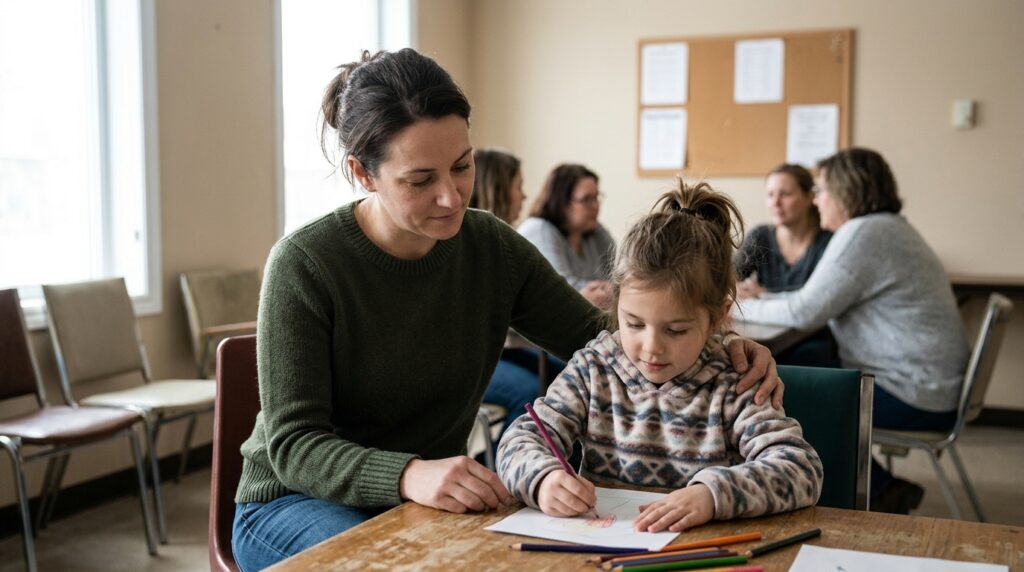
Children whose parents endured childhood abuse or neglect are not destined to suffer the same fate or experience crippling mental health challenges—provided the cycle of mistreatment is halted. A population-based study published in the journal Child Abuse & Neglect reveals that when parents with a history of child welfare involvement successfully shield their own children from abuse, their offspring experience psychiatric outcomes remarkably similar to peers raised in families with no history of abuse at all.
Tracking Trauma Across Generations
Researchers analyzed linked administrative records tracking more than 75,000 Australian children from birth through approximately 18 years of age, evaluating their health outcomes alongside those of their parents. The team sought to understand how familial contact with child protection services (CPS) relates to long-term psychiatric diagnoses.
To evaluate these dynamics, the study classified families into four distinct generational categories: those with no CPS contact, “cycle breakers” where only the parent had a history of CPS intervention, “cycle initiators” where only the offspring had CPS contact, and “cycle maintainers” where both parent and child experienced child welfare system involvement.
The Severe Risk of Continuing the Cycle
Youth who experienced child protection involvement during their own upbringing faced dramatically elevated odds of mental health crises compared to peers with no system involvement. The greatest psychological toll appeared among cycle maintainers, who experienced repeated cross-generational adversity.
According to the findings, offspring in cycle-maintaining families were nearly nine times more likely to receive a diagnosis for externalizing disorders, such as conduct and behavioral problems, and nearly eight times more likely to struggle with self-harm or suicidal ideation. Cycle initiators—children who experienced maltreatment despite their parents having no CPS history—also experienced alarming risks, facing more than fivefold increases in both externalizing conditions and self-harm compared to unaffected peers.
Cycle Breakers Resemble Unaffected Families
In stark contrast, children born to parents with past CPS contact who avoided welfare involvement themselves demonstrated remarkable psychological resilience. Across diagnostic categories, cycle breaker families showed low rates of psychiatric illness that closely mirrored families with zero history of maltreatment.
While statistical models adjusting for sociodemographic factors and parental psychiatric history found modest risk increases for cycle breakers in internalizing disorders, such as depression or anxiety, and externalizing conditions, their risk profile was vastly lower than that of youth who suffered direct maltreatment. The findings indicate that direct child maltreatment during a child’s own lifetime serves as the primary catalyst for severe youth psychiatric conditions, rather than parental trauma alone.
Policy and Early Support Implications
The study provides an empowering message for public health systems: parental trauma does not inevitably doom the next generation to severe psychological distress. Even in families bearing deep scars from past welfare involvement, shielding children from abuse functions as a potent protective shield for their mental well-being.
Public health experts and the study’s authors emphasize that disrupting intergenerational trauma requires targeted, early interventions. Investing in supportive resources that help vulnerable parents navigate stress, access therapy, and avoid child protection intervention can fundamentally change the trajectory of their children’s lives, yielding immense, lifelong mental health benefits.
Source
- Intergenerational patterns of child protection contact and offspring mental disorders from birth to age 18 years: A population-based study of Australian young people
- Researchers: Emma F. McKenzie, Oliver Watkeys, Melissa Mei Yin Cheung, Kimberlie Dean, Ken Zulumovski, Merran Butler, V. J. Carr, Melissa J. Green
- Journal: Child Abuse & Neglect
- Read the original study