
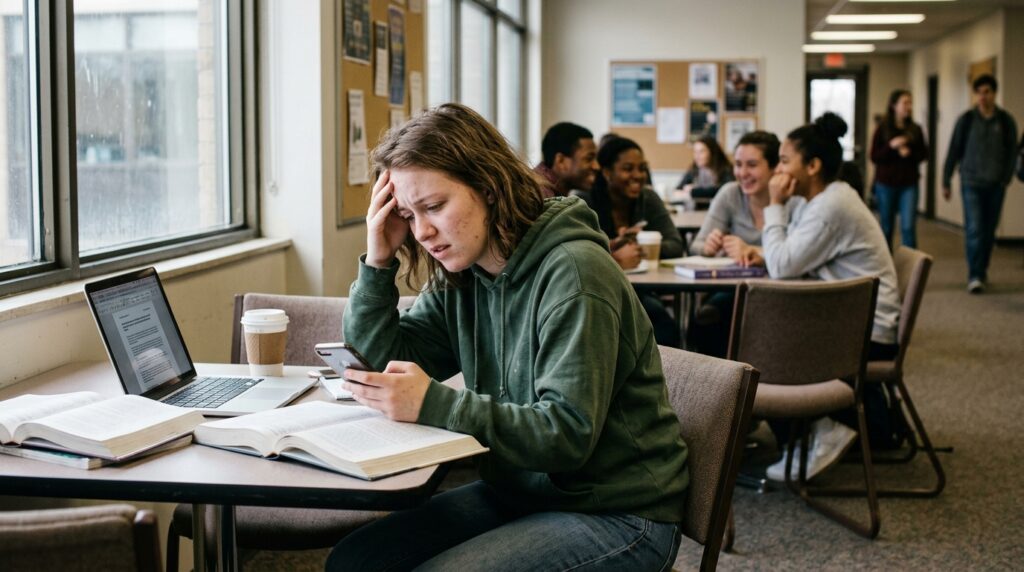
A new study published in the Journal of the Arkansas Academy of Science reveals that the pervasive modern phenomenon known as fear of missing out (FoMO) may serve as a critical bridge linking early childhood adversity to poor physical and emotional health in young adulthood. Conducted by researcher Evelyn Pensamiento, the study demonstrates that traumatic childhood experiences amplify digital-era anxieties, directly hindering a student’s ability to thrive socially, emotionally, and physically in college.
Connecting Childhood Trauma to Modern Digital Anxiety
Decades of clinical research have established that adverse childhood experiences (ACEs)—which encompass forms of abuse, neglect, and severe household disruption occurring before the age of 18—cast a long shadow over lifelong health. Individuals exposed to early family dysfunction face significantly elevated risks for chronic illnesses, depression, and social difficulties later in life.
However, the psychological pathways connecting early hardship to adulthood struggles continue to evolve alongside modern technology. The new study highlights how FoMO—the pervasive apprehension that others might be having rewarding experiences from which one is absent—acts as an intermediary between early trauma and poor adult well-being. Rather than existing purely as a product of excessive screen time, this chronic digital anxiety appears to be deeply rooted in unaddressed childhood distress.
The Widespread Impact on Health and Adjustment
According to the findings, students reporting higher exposure to childhood adversity experienced significantly worse physical health and reduced psychological functioning. In particular, early trauma was tied to lower self-esteem and severe deficits in emotion regulation, leaving young adults poorly equipped to cope with everyday stress.
The negative effects extended into their broader psychosocial lives. Greater exposure to ACEs predicted poorer overall college adjustment, diminished life satisfaction, fragile social connectedness, and elevated levels of loneliness.
Importantly, statistical analysis confirmed that FoMO partially mediated each of these harmful relationships. This indicates that early trauma compromises a student’s well-being in part by stoking a chronic fear of social exclusion, which in turn degrades their physical health, emotional stability, and collegiate integration.
How the Research Was Conducted
To examine these links, the researcher surveyed a sample of 399 college students aged 18 to 25 across the United States. The participants completed a comprehensive series of standardized self-report questionnaires measuring their past exposure to ACEs, their susceptibility to FoMO, and indicators of their physical, psychological, and social well-being.
Through mediation analyses, the researcher evaluated how FoMO accounted for the variance between childhood adversity and each negative health outcome, providing a clearer look into the psychological mechanics that harm trauma survivors as they enter adulthood.
Implications for Campus Support and Mental Health
While previous scholars suggested that hyper-vigilance regarding social belonging might stem from childhood trauma, this study provides the first direct empirical evidence that FoMO helps explain why ACEs undermine college-age well-being. The findings suggest that the compulsion to stay constantly plugged in often masks deeper emotional vulnerabilities rooted in early life.
Consequently, campus counseling centers and mental health programs may need to adapt their strategies. Rather than treating FoMO as a superficial habit or a simple byproduct of social media, clinicians could address it as a manifestation of underlying developmental trauma. Interventions focused on digital anxiety, emotional regulation, and self-worth could provide an effective avenue to help young adults heal from early adversity and achieve lasting well-being.
Source
- "Always Online, Never at Ease: Fear of Missing Out (FoMO) as a Partial Mediator Between Adverse Childhood Experiences (ACEs) and Physical Health, Psychological Functioning, and Psychosocial Adjustment Among College Students"
- Researchers: Evelyn Pensamiento
- Journal: Journal of the Arkansas Academy of Science
- Read the original study