
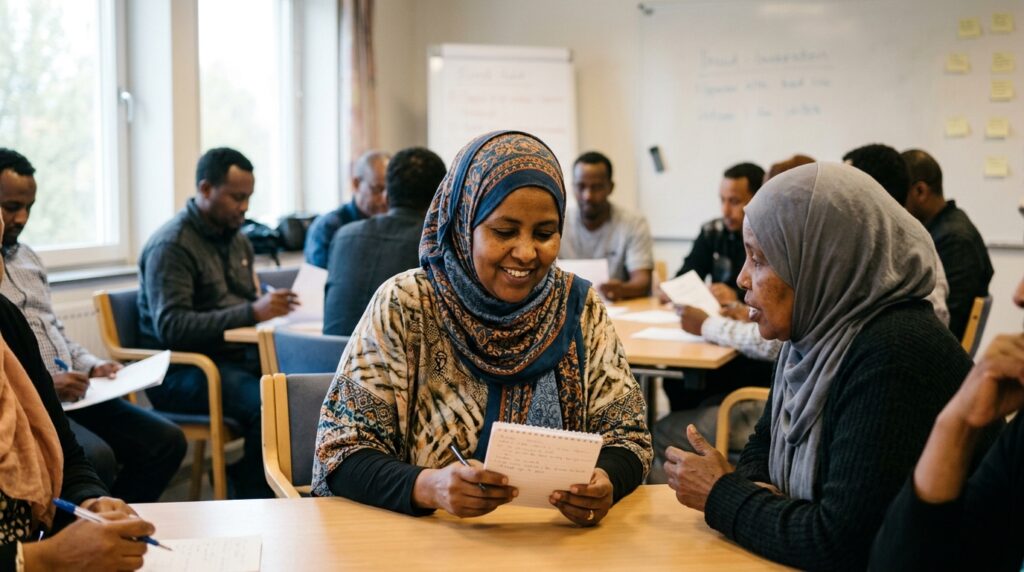
Resettling in a new country presents steep hurdles for families, from learning an unfamiliar language to navigating complex school systems. A newly published study reveals that an accessible, four-session parenting program can provide powerful psychological reinforcement, significantly enhancing personal resilience and school-related confidence among newly arrived immigrant parents in Sweden.
Empowering Parents in a New Homeland
The study, published in the journal Child Development, evaluated an intervention designed to help recently settled caregivers build strong foundations during the resettlement process. Offered universally to immigrant parents rather than exclusively targeting families in distress, the program aimed to strengthen parent-child relationships, nurture mental well-being, and instill a deeper sense of societal belonging.
To eliminate linguistic and cultural barriers, the workshops were conducted entirely in the parents’ native languages—specifically Arabic, Dari, and Somali. By focusing on practical parenting strategies and emotional support within a culturally familiar framework, facilitators sought to equip families with the tools needed to thrive in their new social environment.
Gains in Resilience and Educational Support
The findings showed that parents taking part in the four-session course made meaningful strides compared to those who did not attend. Participants demonstrated a statistically significant increase in psychological resilience, showing an improved capacity to cope with adversity and stress during their integration journey.
In addition, the intervention generated a notable boost in parental efficacy concerning education. Caregivers reported feeling much more capable and self-assured when helping their children with schoolwork and interacting with the local educational framework. Importantly, the researchers observed that parents facing the steepest baseline challenges—such as lower initial confidence or greater settlement hurdles—derived the greatest relative benefits from the program.
How the Clinical Trial Was Conducted
To rigorously evaluate the program’s impact, researchers designed a cluster randomized controlled trial involving 132 parents across 20 distinct group clusters. Participants were recruited between May 2023 and February 2025, with an average age of 42 years; roughly 80 percent of the cohort were mothers.
The study assigned 92 parents across 13 clusters to receive the four-session intervention, while 40 parents across seven clusters were placed in a control group. By randomizing entire clusters rather than isolated individuals, the research team ensured that group dynamics remained intact and that the course was delivered in a consistent, community-based setting.
Why Native-Language Support Matters
Arriving in an unfamiliar society often disrupts family routines and undermines a parent’s sense of competence, especially when parents struggle to decipher local school norms. When caregivers feel disconnected or ill-equipped to support their children’s education, both academic outcomes and family harmony can suffer.
The study highlights how relatively modest, culturally attuned initiatives can produce substantial public health returns. By offering brief, native-language group discussions, communities can support immigrant parents at a critical transition point, providing a scalable blueprint for fostering long-term social integration and family well-being.
Source
- The effectiveness of a universal parenting program for immigrants in Sweden: A cluster randomized controlled trial
- Researchers: Maja Västhagen, Pia Enebrink, Birgitta Kimber, Ata Ghaderi, Sevgi Bayram Özdemir, Brit Oppedal, Metin Özdemir
- Journal: Child Development
- Read the original study