
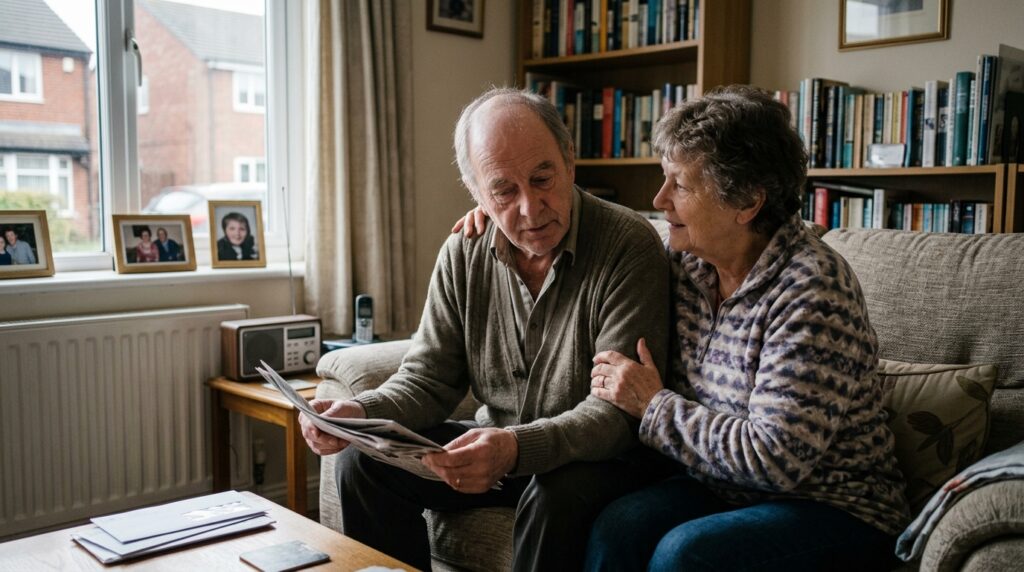
When the COVID-19 pandemic triggered sweeping lockdowns across the globe, older adults suddenly found themselves isolated from community routines and extended circles. A multinational study published in Social Indicators Research reveals that having a partner at home was one of the strongest buffers against deteriorating mental health during this period, whereas relying primarily on friendships unexpectedly increased vulnerability.
Close Partners Shielded Mental Health During Lockdowns
According to the researchers, older adults with core confidant networks centered on a spouse were significantly less likely to report worsening depressive feelings across the first two pandemic waves. Shared living spaces allowed spouses to exchange constant daily contact and immediate logistical aid during periods of strict confinement.
In contrast, participants whose primary confidants were friends experienced an elevated risk of emotional decline. The authors suggest that because public health mandates enforced strict social distancing, friendships were heavily disrupted, cutting off essential avenues of reassurance and camaraderie. Meanwhile, confidant circles focused on extended family showed no definitive protective effect against mood deterioration. Interestingly, individuals who reported having no named confidant before the crisis did not show a clearly heightened risk of worsening depressive states relative to others, suggesting that baseline independence or alternative coping mechanisms may have played an unexamined role.
Women Bore a Heavier Emotional Burden Across All Circles
The study also observed stark disparities between sexes. Women faced a consistently higher risk of deteriorating psychological well-being than men, regardless of the composition of their social networks.
This gender gap was particularly wide during the first pandemic wave, when sudden stay-at-home orders and widespread uncertainty took an acute toll. Although the disparity narrowed somewhat during the second wave as populations adapted to evolving restrictions, women continued to experience higher rates of emotional distress across all network categories.
Mapping Social Circles Across 27 Countries
To untangle these dynamics, the research team drew upon longitudinal data from the Survey of Health, Ageing and Retirement in Europe (SHARE). The dataset tracked individuals aged 50 and older across 26 European nations and Israel, offering a broad geographic perspective on aging during the pandemic.
Using an algorithmic technique known as k-means clustering, the authors classified participants into seven distinct pre-pandemic confidant network profiles based on who they turned to for personal matters. They then estimated linear probability models to measure how each network profile corresponded to self-reported changes in depressive feelings across the successive waves of the health crisis.
Rethinking Support Systems for Future Crises
The findings emphasize that immediate household ties provided a vital emotional and practical anchor when pandemic restrictions dismantled community lifelines. While peer connections are critical under ordinary conditions, physical isolation rules rendered them difficult to sustain when older adults needed them most.
As a result, the authors emphasize that policymakers and public health agencies should consider the vulnerabilities created by specific living arrangements during prolonged emergencies. Moving forward, interventions must integrate gender-sensitive mental health resources and establish targeted outreach channels for older adults living alone or without spousal support to ensure they are not left isolated during future crises.
Source
- Social Networks and Depressive Feelings during the COVID-19 Pandemic in Europe
- Researchers: Damiano Uccheddu, Małgorzata Mikucka, Ester Lucia Rizzi
- Journal: Social Indicators Research
- Read the original study