
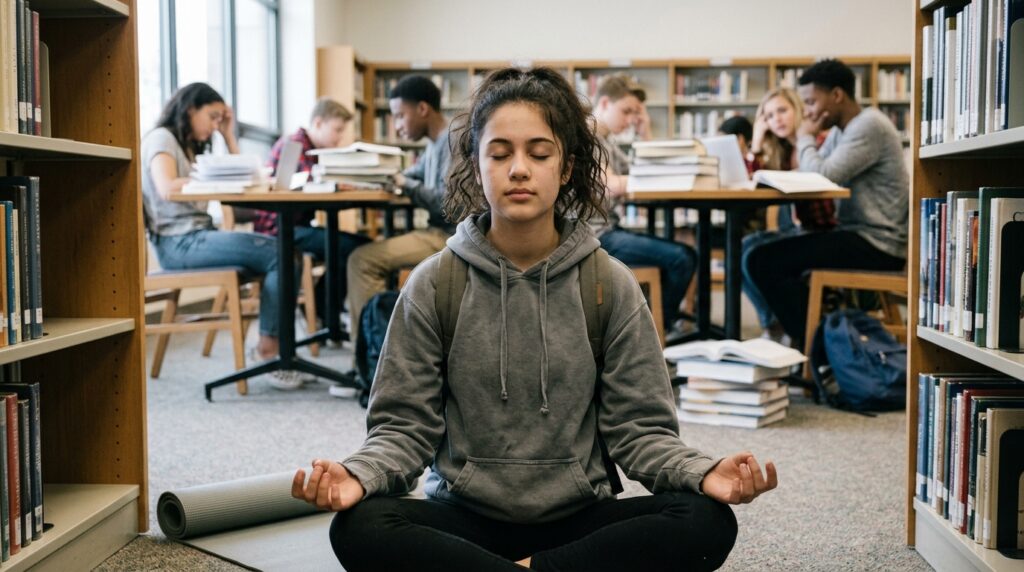
A brief, low-demand yoga routine can significantly reduce examination anxiety and curb compulsive screen habits among teenagers facing academic pressures, according to a study published in the journal Applied Developmental Science. Researchers found that practicing just 21 minutes of targeted yoga every other day helped adolescents manage stress and sharpen their mental focus in the critical weeks leading up to school exams.
The Growing Pressure of Academic Testing
Adolescence is a pivotal stage of development marked by the ongoing maturation of emotional self-regulation and cognitive control. However, these burgeoning psychological capacities are frequently strained in modern academic environments, where high-stakes testing imposes heavy psychological demands on teens.
During periods of intense academic evaluation, acute stress can overwhelm young people, triggering patterns of emotional and behavioral dysregulation. To address this widespread issue, a team of researchers investigated whether an accessible, low-barrier mind-body practice could act as a protective buffer, equipping students with practical tools to navigate heightened academic strain without burdening their already demanding schedules.
Testing a Bite-Sized Yoga Routine
To evaluate the intervention, the researchers conducted a randomized controlled trial involving 80 adolescent participants. The students were assigned either to an active yoga group or to an untreated control group during the four weeks preceding their academic examinations.
Recognizing that overloaded students rarely have time for lengthy wellness regimens, the researchers designed a concise program tailored to realistic student routines. The intervention consisted of two distinct 21-minute yoga modules practiced on alternating days. Over the course of the four-week period, participants engaged in these brief sessions to determine whether consistent, bite-sized practice could counter the cognitive and physiological fallout of exam-related stress.
Widespread Relief for Sleep, Focus, and Screen Habits
The results revealed broad benefits across multiple dimensions of adolescent well-being. Compared to their peers in the control group, students who practiced yoga exhibited statistically significant improvements across all measured outcomes, showing fewer concentration difficulties, reduced sleep disturbances, and lower overall stress-associated dysregulation.
The most pronounced positive shifts were observed in the reduction of examination anxiety and problematic internet use. Teenagers often turn to digital devices as a form of avoidant coping when confronted with overwhelming academic demands. By mitigating the physiological tension associated with testing, the yoga practice appeared to diminish the urge to escape into screens, allowing students to approach their academic responsibilities with improved focus.
A Scalable Tool for Schools
Because the routine requires under half an hour every other day and relies on minimal physical equipment, it represents an economical and scalable strategy that educational institutions could easily integrate into exam preparation programs. Rather than expecting students to independently master complex wellness regimens, schools could provide structured, brief sessions that protect mental health during peak testing cycles.
While the trial of 80 participants provides promising initial evidence for the intervention’s efficacy, the researchers noted that larger follow-up studies will be valuable. Continued investigation will help clarify how long these psychological benefits persist after testing concludes and whether ongoing practice can foster long-term emotional resilience throughout the school year.
Source
- Helping adolescents navigate examination stress: Evaluation of an accessible yogic intervention
- Researchers: Reshu, Surendra Kumar, Ashutosh Rathi
- Journal: Applied Developmental Science
- Read the original study