
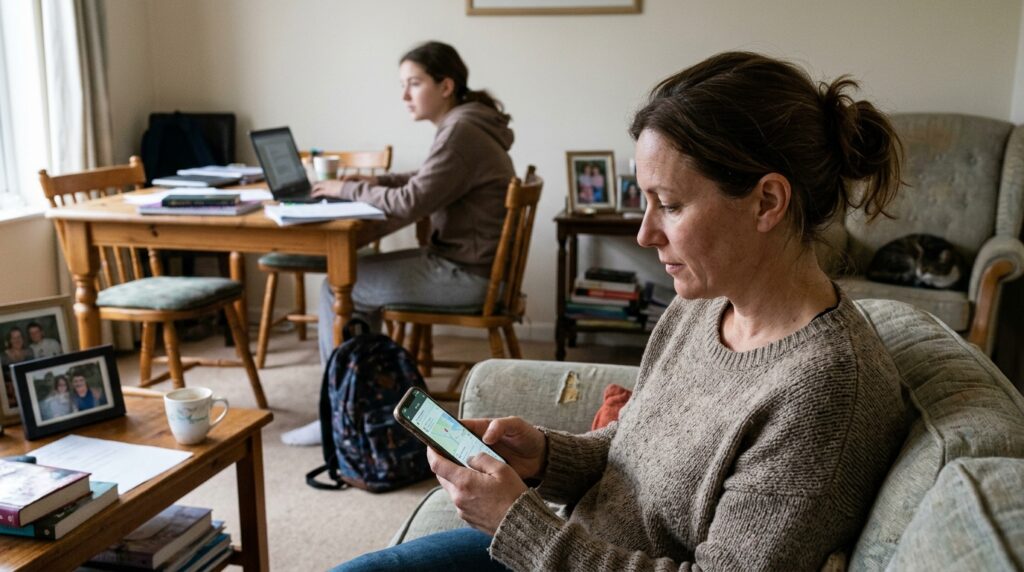
Parental digital tracking has transitioned from an occasional safety measure into a near-universal fixture of modern adolescence. According to a study published in the Journal of Adolescence, virtually every parent now keeps tabs on their teenagers through digital monitoring tools that track school performance, bank balances, and real-time physical locations. Rather than triggering widespread conflict, this hyperconnected surveillance has become increasingly normalized by parents and teenagers alike.
A New Normal in Parental Surveillance
The study, led by researchers Savannah Boele, Anne Bülow, and Loes Keijsers, revealed that a striking 99.6% of parents surveyed in 2024 monitored at least one area of their adolescent’s life digitally. Whether checking digital gradebooks, checking debit card transactions, or following GPS pins on a smartphone map, digital tracking tools are now firmly integrated into the daily routine of family life.
This reality marks a notable shift over a relatively short period. When comparing the 2024 cohort to a sample evaluated in 2019, the researchers observed a significant rise across the past five years in both school and location tracking. Parallel to this technological ramp-up, adolescents’ acceptance of being monitored also climbed, showing that teenagers are growing increasingly accustomed to living under a digital lens.
Driven by Parental Anxiety, Not Teen Misbehavior
Contrary to common assumptions, frequent digital surveillance is not typically prompted by adolescent misconduct or poor psychological outcomes. The researchers found that digital tracking was unrelated to indicators of teen maladjustment, such as anxiety symptoms. Parents do not appear to intensify tracking because their children are struggling or acting out.
Instead, heavy tracking was strongly tied to the parents’ own psychological dispositions. The study linked frequent digital monitoring to parental control- and fear-related traits, including overprotection and dangerous worldviews—the deeply held belief that the outside world is inherently hazardous. In effect, the apps seem to serve as a tool for managing parental worry rather than addressing adolescent behavior.
What Gets Tracked Depends on Age and Gender
The nature of digital tracking evolves as children mature, reflecting changing parental priorities. Younger adolescents and boys were tracked more frequently regarding their academic performance via online school portals. Conversely, older adolescents experienced more frequent location tracking, as their physical independence expanded outside the home.
Yet, adolescent acceptance has its limits. While teenagers largely tolerated parents monitoring their academic progress and financial habits, location tracking met with the highest levels of resistance. Physical mobility represents a crucial frontier in establishing personal autonomy, making real-time geofencing the most contentious domain of parental surveillance.
Questions for the Future of Family Life
Because digital tracking often functions as a coping mechanism for parental insecurity, researchers caution that relying on surveillance apps may not solve underlying parental fears. Constant digital monitoring offers an illusion of control, but it remains unclear whether real-time data actually puts anxious minds at ease.
The authors emphasize the need for longitudinal studies to evaluate the long-term impact of these technologies on the parent-child relationship. Future research must determine whether digital tracking successfully reassures anxious parents or inadvertently feeds a cycle of apprehension that could ultimately undermine well-being for both parents and teens.
Source
- Parental Digital Tracking of Adolescents' School Performance, Location, and Finances: Widespread, Often Accepted, and Linked to Overprotection
- Researchers: Savannah Boele, Anne Bülow, Loes Keijsers
- Journal: Journal of Adolescence
- Read the original study